
Caves of Central Oregon
Central Oregon’s caves
Bend, along with its neighboring cities of Redmond, La Pine, and Sisters, serves as a central hub for caving activities in Oregon. Situated in Deschutes County, this region boasts the highest concentration of caves in the state, currently exceeding 858. It’s anticipated that this number will continue to rise, potentially reaching 1,000 as new caves are discovered annually.
While the sheer number of caves is impressive, the diversity is somewhat limited, with 702 being lava tubes. The majority of the remaining 156 caves also have volcanic origins, typically formed as OVCs (open vertical conduits), spatter cone caves, inflationary caves, fissure vents, bubbles, and lava molds. This leaves only about 60 caves that were not directly created by actively flowing lava. However, many of these non-lava caves are still located within volcanic bedrock.
Of these 60 non-lava caves, fissures are the most common. These are giant cracks that have split the volcanic rock, often forming along rift zones associated with shield volcanoes or calderas. Rift zones are a result of internal pressure from upwelling magma. This pressure fractures the Earth’s crust, creating fissures, some of which can reach depths of up to 150 feet in Central Oregon.
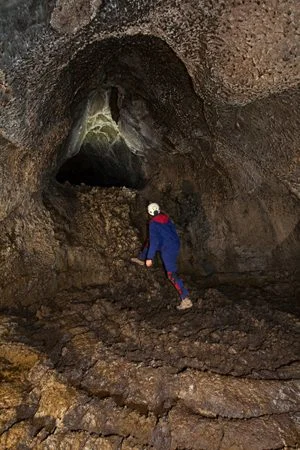
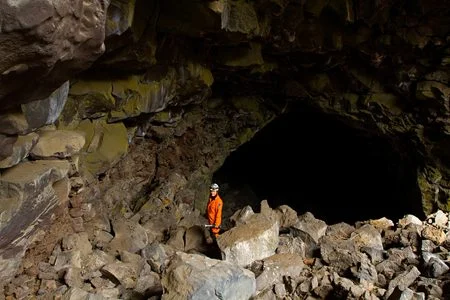
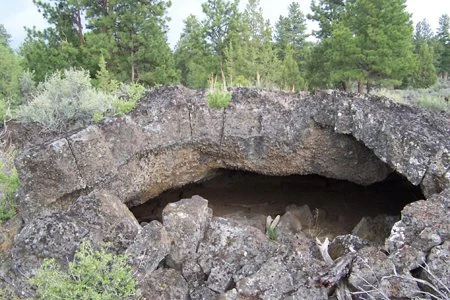
Rockshelters, also known as shelters, are shallow overhangs and constitute another significant portion of the non-lava caves, even though many occur in volcanic formations like welded tuff or andesite.
Rockshelters form through various erosional processes, primarily water, wind, and gravity, which gradually carve away rock. Predominant in our area, they are often found in the rimrock of ancient lava flows or the eroded faces of welded tuff, such as at Smith Rock.
These erosional features can also be classified as erosional caves.
Some of the remaining non-fissure and non-shelter caves include snow caves, also called ablation caves. These differ from glacier caves, which form within glaciers. In Deschutes County, snow caves mainly occur near volcano summits where geothermal venting melts snow, creating cavities. These snow caves are typically temporary, forming each winter.
Finally, a small number of talus caves exist, defined by the interior spaces formed between loose boulders that have fallen in a haphazard manner. These usually occur at the base of rimrock or along faults where rocks have been dislodged.
While Deschutes County’s caves are predominantly lava-related, the broader Central Oregon area exhibits slightly greater diversity. Adjacent counties also contain numerous lava tubes and other types of lava caves, but this region uniquely features fascinating “piping” caves. Piping is a form of internal water erosion within unconsolidated rock material. Central Oregon holds the distinction of having the largest known piping cave in North America.
Let’s talk lava caves
The Central Oregon landscape is marked by cinder cones and volcanoes, with lava flows of andesite, basalt, rhyolite, and dacite exhibiting textures ranging from pahoehoe to aa and block lava. Lava caves can form in all these lava types, but the vast majority are found in basaltic flows with a pahoehoe consistency. Lava tubes are the most common type, generally forming when the surface of an active lava flow cools and hardens, while the insulated interior continues to channel the molten lava along the path of least resistance. Once the eruption ceases, the remaining lava drains, leaving behind a hollow tube. It can sometimes take a year or more for these tubes to cool sufficiently for safe entry.
Deschutes County currently has 702 known lava tubes, with many more expected to be discovered and even more speculated to exist beneath the surface without accessible entrances. Lava tube entrances typically form during or immediately after the eruptive event as the lava flow cools and contracts. Weak structural points in the tube’s ceiling can collapse, creating openings to the surface. It’s also possible that some lava tubes never developed a complete roof, often found near the vent where temperatures were too high for consistent cooling or where fluctuating lava volumes prevented roof formation.
Lava tube systems are interconnected networks of lava tubes originating from a single lava flow. The Arnold Lava Tube System is a prime example. These systems usually feature a main conduit, sometimes called the master tube, which serves as the primary channel for the lava. This distinguishes them from other lava flows containing individual lava tubes that dispersed lava in multiple directions, typically resulting in smaller tubes.
This region is home to two well-known lava tube systems, the Arnold and Horse Lava Tube Systems, both formed approximately 80,000 years ago from a single eruption on the northern flank of Newberry Volcano. While other lava tube systems exist in the area, they are generally less extensive, ranging from as few as four tubes to as many as dozens.
It is rare to find caves in Central Oregon larger than those within the Arnold and Horse systems. These extensive networks contain some of the biggest and longest caves in Deschutes County. The majority of caves in the Horse system are on private land, and their access is determined by the landowners. In contrast, all but two caves in the Arnold system are on public land and experience significant impact from visitors. These caves, unfortunately, receive a considerable amount of trash and intentional vandalism each year, making it crucial for us to keep them safe and clean for future enjoyment.
The lava tubes of Central Oregon are widespread, found in the high desert, the mountains, and even within cities like Bend. They have existed for thousands, and in some cases hundreds of thousands, of years. Native Americans utilized them until the arrival of European settlers. When Bend was established, Arnold Ice Cave was mined for ice after Hugh O’Kane monopolized the market. Even today, lava tubes are sometimes incorporated into residential construction as a natural and cost-effective way to cool homes during the summer.
There are three main types of lava tubes in our area: unitary, multilevel, and multilateral. Boyd Cave near Bend is a classic unitary tube, consisting of a single, unbranching passage. Multilevel tubes have more than one level, with passages stacked vertically and connected by openings in the floor or ceiling. Multilateral tubes feature connected, parallel tubes, sometimes with as many as three or four running alongside each other.
Similar to lava tubes, surface tubes form on the surface of lava flows. They typically have a narrow cross-section, sometimes restricting exploration to small animals. However, some can be large enough for human exploration for distances of fifteen to twenty feet or more. Surface tubes form when internal lava from an active lava tube extrudes to the surface. In some cases, they can connect to larger conduits below and, like lava tubes, can form interconnected networks. Spatter cone caves are lava caves that form within or from spatter cones, which are small, cone-shaped vents located at the main eruption point. They form atop emerging lava, gradually building miniature cones that can leave internal cavities upon cooling. Spatter cone caves can be simple hollow cones or exhibit similarities to surface tubes, occasionally connecting a surface tube to the spatter cone.
Open Vertical Conduits (OVCs) are vertical shafts that originate at the main vent of a lava flow. Similar to spatter cones but often much larger and originating deeper underground, they are typically located at the base of a cinder cone. Most OVCs are singular shafts, representing points where lava breached the surface long ago. In rare instances, OVCs can overlie and connect to lava tubes. In Central Oregon, OVCs range in depth from 4 feet to the deepest known at 150 feet. Safe exploration of OVCs requires training in vertical gear and single-rope techniques.
Inflationary caves are another type of lava cave, often resembling lava tubes. They form when the still-malleable outer crust of a lava flow inflates or expands, creating internal caverns. In some inflationary caves, as the surface expands, the interior wall linings can detach and roll downwards due to gravity, a process called scrolling, resulting in lava scrolls commonly observed in caves like the Matz Caves. Other less common inflationary caves form when the internal lava within pressure ridges (also called tumuli) drains away. These are usually entered through tension cracks on the ridge’s summit.
Fissure vents, or rift tubes, can be difficult to distinguish from regular lava tubes due to their similarities. While technically a type of lava tube, they have a unique formation process. They form within rifts or fissures, typically at a lava vent where lava is extruding. Formation occurs when internal lava pressure cracks the surface, creating a fissure. Subsequent lava flows into this rift, forming narrow lava tubes with high ceilings. Only two known examples of rift tubes exist in our area.
Lava bubbles can form in basalt, but the most common examples in Central Oregon are found in rhyolitic obsidian flows. These form when pressurized bubbles develop in partially molten rhyolite. When these bubbles reach the surface and “pop,” they can leave depressions or partial collapses. The obsidian bubble caves of Central Oregon are remnants of this activity and are among the few known examples worldwide.
Lava tree molds, sometimes incorrectly called lava tree casts, are empty cavities that once contained tree trunks. Typically formed in aa flows, a tree is partially or entirely engulfed by advancing lava. As the tree burns, the surrounding lava cools and hardens, forming a crust around the trunk. The trunk then completely burns away, leaving a hollow mold. Both vertical and horizontal tree molds have been found, sometimes preserving bark imprints in the mold lining. In Washington state, some horizontal tree molds connect two or more trees. In California, one lava tube contains vertical tree molds within its main passage, appearing as slender lava pillars.
Common and uncommon features of lava tubes
The features within lava caves and lava tubes have been documented extensively. Some are rare, while others are quite common. The lava tubes of Central Oregon share many characteristics. Perhaps the most prevalent is “breakdown,” which occurs as the lava tube cools and contracts, causing walls or sections of the ceiling to collapse, leaving boulders inside. While further collapses can occur over time, most lava tubes have remained structurally sound for thousands of years, even surviving numerous earthquakes.
Sand is another common feature, often entering subterranean cavities through surface cracks and being carried down by rainwater. It can also be washed into a cave from a collapsed entrance due to rain runoff. Over time, accumulated sand and dirt can be shaped by dripping water into intricate formations called “sand castles.” The commercial Lava River Cave once had remarkable sand castles, but generations of visitors have unfortunately damaged them significantly. Sand castles are now among the rarest formations in Central Oregon, with only a handful of lava tubes containing them and only three outstanding examples remaining.
Original lava features are very common, with terms like “original floor” and “original lining” indicating surfaces that appear as they did when the lava ceased flowing millennia ago. Many other flow features exist, such as cauliflower aa, a type of original floor that displays the transition from pahoehoe to aa within the tube, forming spiny or knobby bumps. Another uncommon original feature is shelves, which represent previous levels of lava flow within the tube.
Perhaps the most visually striking features are the delicate stalactites and stalagmites, both formed by dripping lava. Stalactites hang from the ceiling where lava seeps from cracks or behind wall linings. If this lava drips onto a stationary floor, it can accumulate into slender or stout spires called stalagmites. Contrary to some beliefs, these formations will not regrow if damaged. Like all lava features in a lava tube, once the lava stops flowing, the formation process is complete. This highlights the importance of a hands-off approach to preserve these features that have endured for millennia. A single misstep can destroy something irreplaceable.
Secondary mineral formations are less common in lava tubes, but several types exist. Gypsum minerals can form along ceilings, walls, and floors, appearing as a thick white crust. Gypsum typically forms where small amounts of water have entered a cave with minimal air exchange. One notable example is Feather Bed Cave, which was accidentally breached by a pipeline crew. Previously without an entrance, its floor contained a foot-thick layer of gypsum powder.
Coralloids are another type of secondary mineral very common in the semi-arid lava tubes of Central Oregon. Primarily siliceous and very small, they vaguely resemble coral, hence their name, and often take on the color of the surrounding lava rock. Typically about the size of a bead, larger specimens can reach the size of a dime. They are extremely fragile, but unlike other features, they can regrow, albeit over hundreds to thousands of years.
Another very common, though often overlooked, mineral formation is ice. While not traditionally classified as a mineral, it is present in many lava tubes during winter and late spring. Although it has the benefit of rapid annual regrowth, it is still treated with care and should not be touched so its unique subterranean beauty can be appreciated by all. In some caves, ice persists year-round. In these cases, a strict no-touch policy is essential. While some lava tubes are referred to as “ice caves,” this can be misleading, as the cave itself is not primarily composed of ice. The term “ice cave” is more appropriately used for caves that harbor ice throughout the year.
Lava falls, as the name suggests, resemble waterfalls but are composed of solidified lava. Unlike flowing water, lava falls are frozen in time, capturing remnants of lava as it cascaded down a sudden drop in the floor. The only known freestanding lava falls are located in Manjanggul Cave, South Korea.
Figures
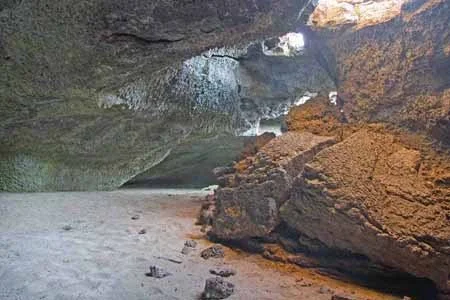
Figure 1 – The sandy floors of Wolff’s Teepee Cave.
Photo: Brent McGregor
Figure 2 – Some of the last remaining sand castles in Oregon. Note that some are half as tall as Matt Skeels in this photo.
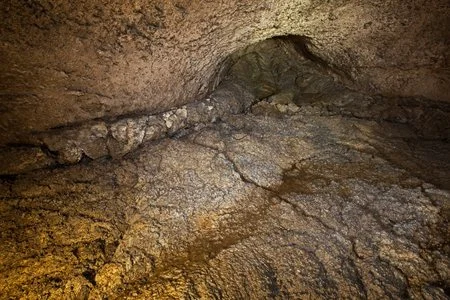
Figure 3 – Original floor and walls in Lost and Found Cave.
Photo: Brent McGregor
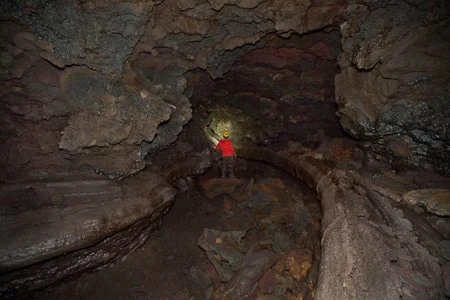
Figure 4 – Benches in Infinity Cave. Usually benches overhang slightly.
Photo: Brent McGregor
Figure 5 – Sam Loomis by a large diameter stalagmite.
Figure 6 – Thick gypsum deposits in a cave of eastern Oregon.
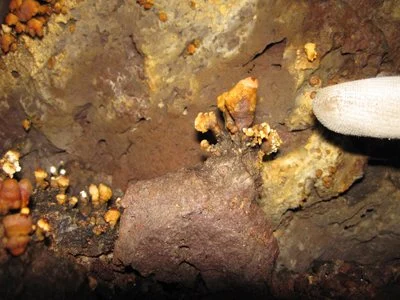
Figure 7 – Large coralloids in Stookey Ranch Cave.
Photo: Brent McGregor
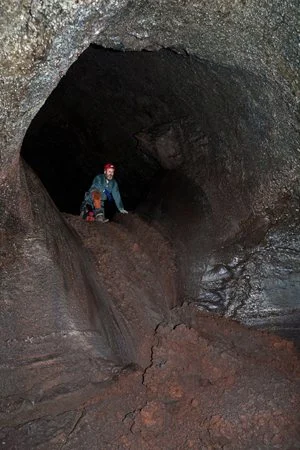
Figure 8 – Brent McGregor on top of a lava fall in Dynamited Cave.
Photo: Brent McGregor